ENDURANCE CYCLING
Cycling rewards attention to the whole ride.
Distance and speed describe only part of a ride. Surface, traffic, wind, heat, nutrition habits, equipment, route decisions, and the reason for riding all shape the experience.
For men over 35, cycling may sit beside work, family, strength sessions, and running. A sustainable practice therefore depends on fitting the ride into a life rather than asking life to disappear around the ride.
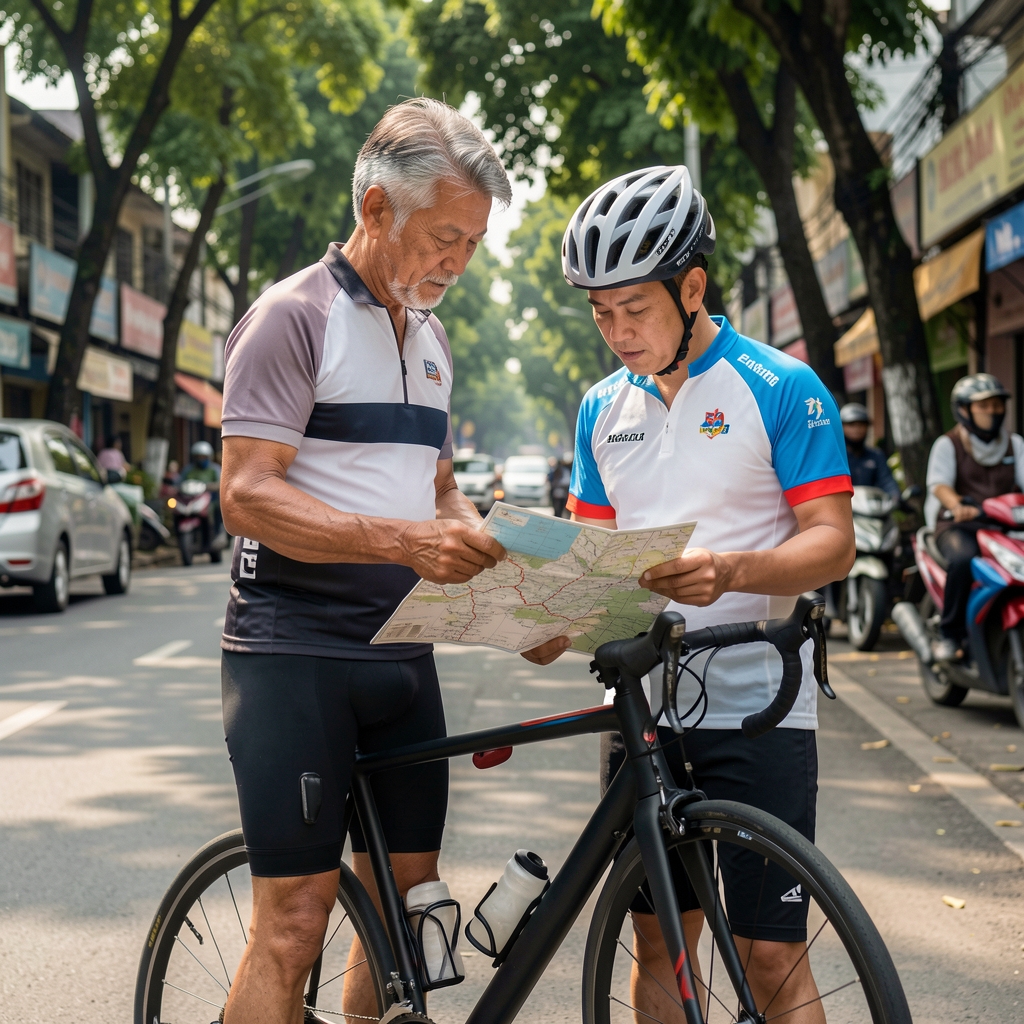
“The route is part of the session.”
“Cadence is information, not a moral score.”
“A turn-back point is part of good planning.”
Ride types and decisions
| Ride focus | Primary question | Context to record |
|---|---|---|
| Easy movement | Can conversation and control remain comfortable? | Heat, route, and accumulated fatigue |
| Focused intervals | What is the purpose of the harder work? | Warm-up, recovery, and surface |
| Long ride | How will effort be distributed? | Water access, shade, and return options |
| Commuting | How can safety and consistency coexist? | Traffic, time, and equipment checks |
- Inspect the bicycle and contact points before leaving.
- Use visible clothing and a route appropriate to current traffic conditions.
- Carry practical communication and hydration options.
- Leave flexibility for weather and the return journey.
A ride planning checklist
- Purpose: name what the ride needs to provide.
- Route: identify distance, surface, shade, traffic, and exits.
- Effort: decide how the first third should feel.
- Review: record the conditions before comparing numbers.
In warm weather, the same route can carry a different internal cost. Wind may cool one exposed section and disappear in another. A headwind can make a return harder even when the outward pace looked easy. These are not excuses; they are useful facts in the ride record.
Equipment as information
Fit, tyre pressure, lighting, carrying capacity, and contact points influence how a ride feels and how confidently a rider can respond to the route. Equipment should be checked in proportion to the journey, with special attention to brakes, visibility, and communication.
- Check the bicycle before a longer or unfamiliar route.
- Keep essential items accessible rather than buried in a bag.
- Replace a planned route when surface or traffic conditions are unsuitable.
“Prepared equipment gives attention back to the road.”
Safety is a training variable
Traffic, visibility, road surface, and communication deserve the same seriousness as distance. A ride that ends early because conditions are unsuitable can still be a sound decision. Solace writes from Jakarta and keeps practical context at the centre of its cycling coverage.
Contact Jalan Cempaka Putih Raya No. 15, RT.8/RW.5, Cempaka Putih Barat, Kota Jakarta Pusat, Daerah Khusus Ibukota Jakarta 10520, Indonesia, or +62 21 726 1835.