RECOVERY CONTEXT
Sleep changes the starting point of a training day.
Sleep is not a character test or a performance promise. It is one part of the context in which a person interprets effort, makes decisions, and recovers between sessions.
Work schedules, family responsibilities, travel, heat, noise, and evening routines can all influence the opportunity for sleep. A useful plan acknowledges those factors instead of pretending every morning begins from the same baseline.
Read the week, not one score
| Observation | Possible context | Useful next question |
|---|---|---|
| Short sleep opportunity | Late work, travel, or family schedule | Can the session be simplified? |
| Restless night | Heat, noise, stress, or unfamiliar room | What can be controlled today? |
| Normal duration, low energy | Accumulated training or broader fatigue | What else changed this week? |
| Good morning, difficult session | Warmth, pacing, or expectation | What did the session reveal? |
The table is a conversation aid, not a method for assigning a cause. Several explanations may fit the same observation. Recording context keeps the interpretation flexible and makes later comparisons more useful.
Make the evening practical
- Keep the final hour predictable where the schedule allows.
- Reduce avoidable light, noise, and work interruptions.
- Prepare clothing, route, and water before the evening becomes rushed.
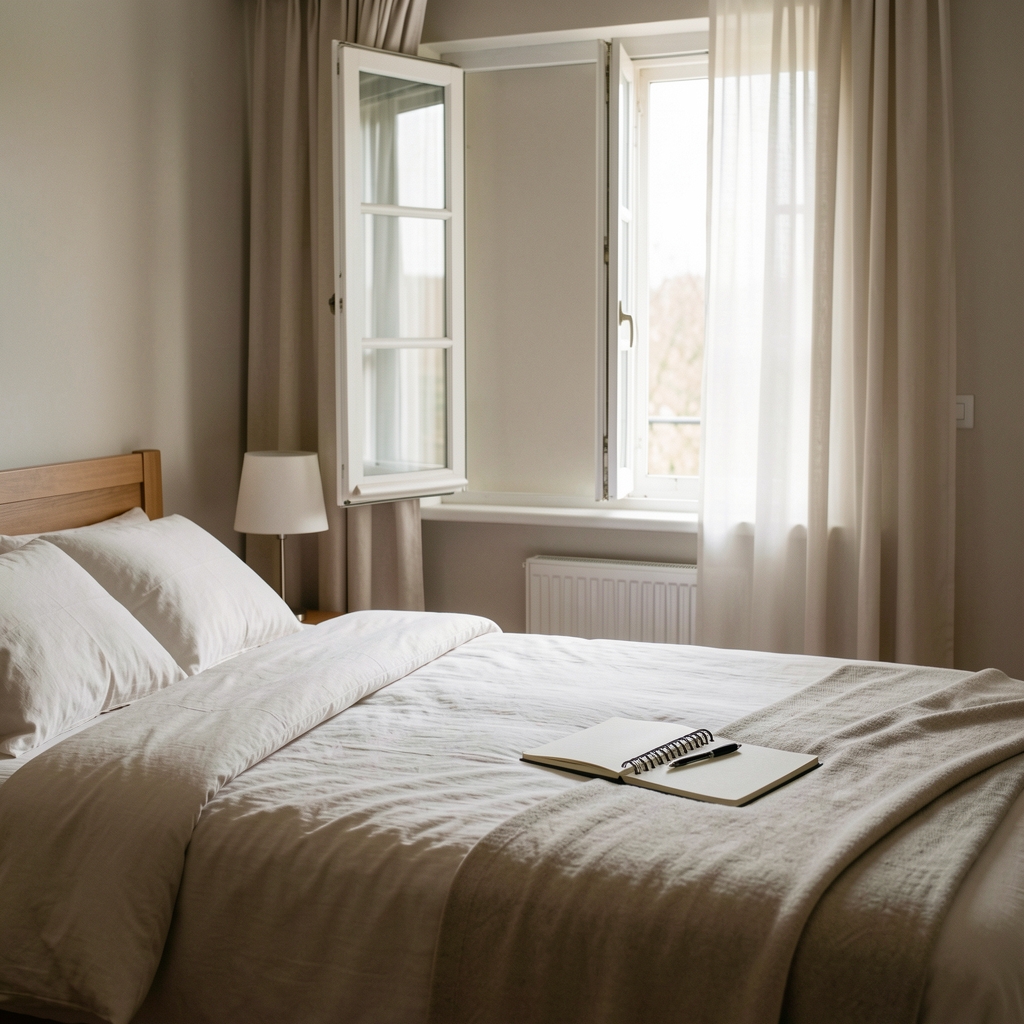
- Use a short note to set tomorrow’s priorities without replaying the whole day.
These are options rather than rules. A routine that can be repeated on ordinary nights is more useful than a complicated system that creates additional pressure. Travel and shared rooms may require a different approach, and that difference is part of the record.
A three-question morning review
- What was my sleep opportunity, separate from the time I was in bed?
- How does my current effort compare with the intended purpose of the session?
- What adjustment would preserve the week’s direction without forcing today?
“The morning question is not whether the night was perfect; it is what the available information suggests today.”
Persistent sleep disruption, significant daytime impairment, or concerns beyond ordinary training context deserve a conversation with an appropriately qualified professional. Solace does not assess individual conditions through an article.
Keep the record humane
Use notes to understand patterns, not to judge yourself. Solace welcomes editorial questions at Jalan Cempaka Putih Raya No. 15, RT.8/RW.5, Cempaka Putih Barat, Kota Jakarta Pusat, Daerah Khusus Ibukota Jakarta 10520, Indonesia, or +62 21 726 1835.