Pattern
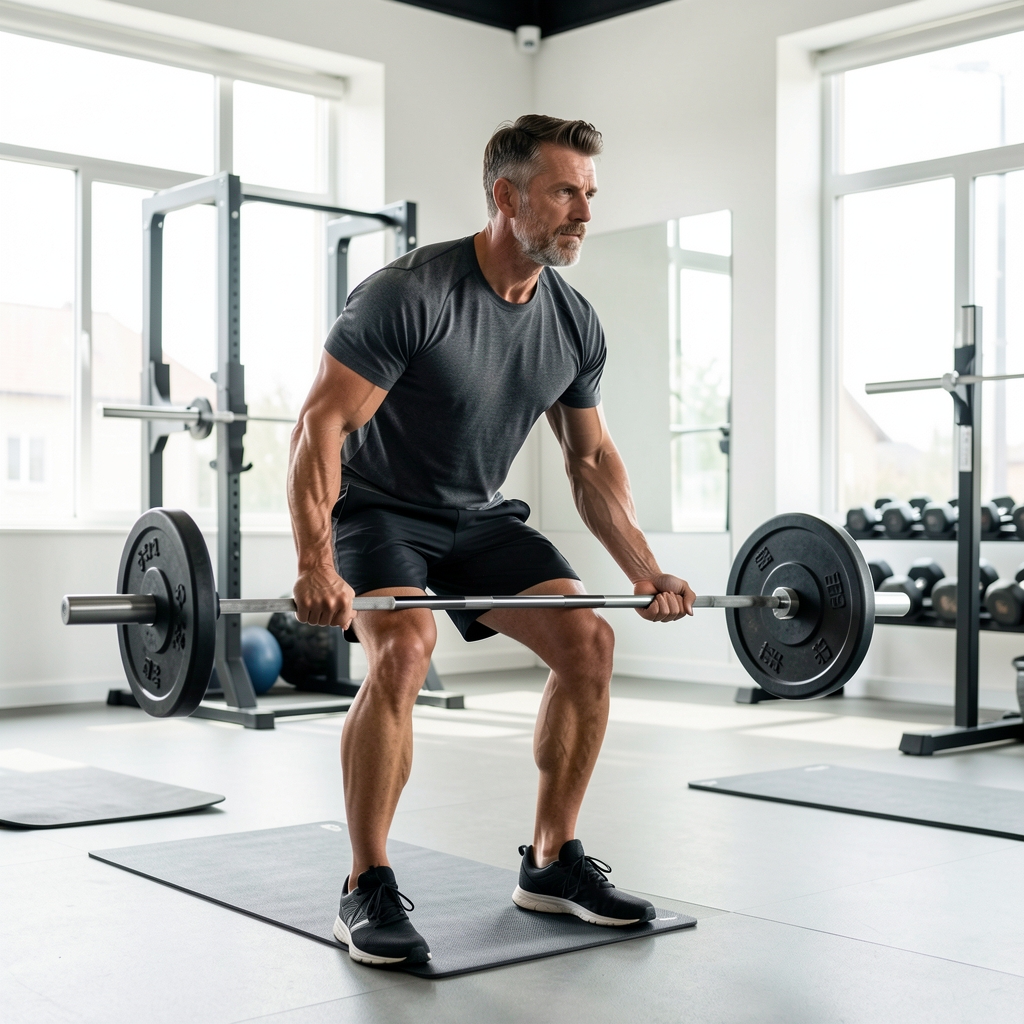
Choose movements that express a squat, hinge, push, pull, carry, or rotation in a form you can understand.
CAPACITY
For endurance athletes and active men over 35, strength work is often most useful when it supports the movements, positions, and decisions that matter outside the gym.
Load selection is a conversation between experience, technique, time, and recovery opportunity. A session should be clear enough to repeat and flexible enough to change when the surrounding week changes.
Choose movements that express a squat, hinge, push, pull, carry, or rotation in a form you can understand.
Use a range, speed, and load that allow the intended pattern to remain recognisable from the first repetition to the last.
Place the session where it can coexist with running, cycling, work, and sleep rather than competing with all of them.
| Situation | Planning emphasis | Example adjustment |
|---|---|---|
| Busy work week | Short, familiar sequence | Fewer movements with clear rest |
| After hard endurance work | Technique and modest demand | Reduce volume and protect form |
| Learning a new pattern | Low complexity and feedback | Use a lighter practice load |
| Consistent block | One planned variable at a time | Review response before progressing |
The matrix is deliberately conservative. It does not tell a reader what weight to use because that depends on training history, equipment, technique, and personal circumstances.
“Strength is easier to build into a life when the session has a clear reason for being there.”
What quality is the session intended to develop? What other work surrounds it? Which part of the session could be removed without losing the purpose? These questions help keep training specific and reduce the temptation to treat volume as the only sign of progress.
For editorial enquiries, contact Jalan Cempaka Putih Raya No. 15, RT.8/RW.5, Cempaka Putih Barat, Kota Jakarta Pusat, Daerah Khusus Ibukota Jakarta 10520, Indonesia, or +62 21 726 1835.